Touch protection plate
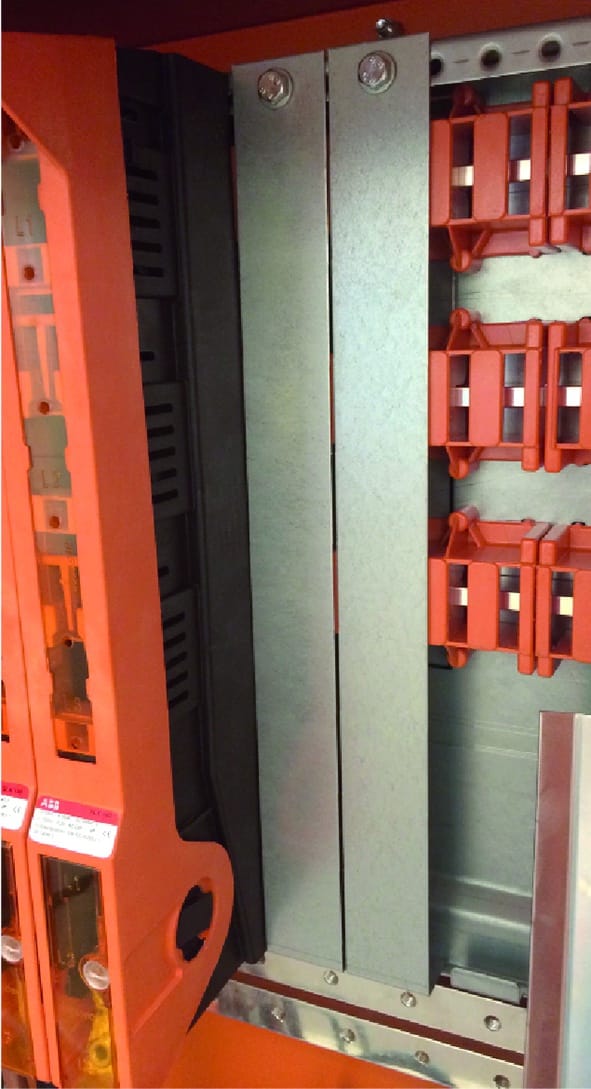
Touch protection plate
SMC module system touch protection plate to securely cover additional module slots.
Touch protection plate – sMC module system touch protection plate to securely cover additional module slots.
Touch protection plate on the worksite
The plate covers an unused module slot or holds the clamp in place. Behind an open slot there is a live busbar, so the slot must not be left open.
On a site the board configuration changes during the project. When a module is removed a plate goes in its place – in practice that is the most common reason one is needed.
Where Touch protection plate is used
Typical sites are construction projects, renovations, industrial maintenance and event power. What they share is that the electrical supply is temporary and the conditions are demanding.
Temporary does not mean lighter requirements. Site equipment is exposed to dust, moisture, moving and mechanical stress in a way that fixed installations never are.
Check the load distribution between phases during use. Uneven distribution overloads one phase while the others run half empty, and the usual symptom is a fuse that keeps tripping.
How to choose the right model
The equipment is chosen by rated current and outputs. Start by calculating the simultaneous load and the output types needed, and choose the model on that basis.
Other models of the same type are Mounting plate for connector, Mounting plate for connector (kopio).
You can see the full range in the product group, and read about real-time monitoring on the Spine page.
Practical notes for use
The condition of a joint is an electrical safety matter. A poor joint does not show from the outside, but it heats up under load, and the heat damages first the insulation and eventually the busbar.
Check the joint after the first day of loading and regularly after that. A joint with an aluminium conductor needs checking more often than copper, because aluminium creeps under tightening.
Clean the conductor end before connecting and use contact compound for aluminium where the manufacturer says so. An oxidised surface raises the contact resistance considerably.
Touch protection plate – installation and maintenance
Installation and connection work is carried out by a qualified electrician. The equipment must be made dead before connection work, and the absence of voltage verified by measurement.
Place the equipment on level ground and so that it can be reached freely even when the site fills up with material. Material stacked in front blocks both use and emergency isolation.
Test the RCD with its test button at commissioning and at regular intervals afterwards. The test takes a second and is still almost always forgotten.
Check the joints and fixings regularly during use. A joint that heats up is a sign of a fault and should be corrected before the fault spreads.
Safety and inspections
Site electrical installations are subject to the same requirements as fixed installations, and some of them are stricter. The equipment has to withstand moving, dust, moisture and mechanical stress for the whole project.
The installation is inspected at commissioning and regularly during use: enclosure, joints, the operation of the protective devices and the fact that live parts cannot be reached.
Damaged equipment is not repaired improvised on site. A cracked enclosure, a burnt terminal or a damaged socket is replaced – on a site a temporary repair almost always becomes permanent.
Document the configuration and any changes made. Up-to-date information on outputs and protection speeds up fault-finding and the next inspection.
Delivery and sizing help
We deliver the equipment together with the cables and the rest of the site power supply in one delivery, so the set is complete when it arrives on site.
Describe the whole site in your request for quotation: supply power, the outputs needed and the estimated length of the project. We size the set on that basis.
We also help with the sizing. If you are unsure about the size or the number of outputs, ask us – equipment sized wrong costs more than equipment chosen right the first time.
Touch protection plate – technical data
| System | SMS-moduulijärjestelmä |
| Intended use | Ylimääräisten moduulipaikkojen peittäminen |
Frequently asked questions
Who may install the product?
Installation is carried out by a qualified electrician. The requirements are explained in more detail on the Tukes website.
The requirements for electrical installations on worksites are explained in more detail on the Tukes website.
Request a quotation
Add to the quotation basket and send us your request – we will confirm availability and delivery time at the same time. You can see the full range in the product group.
Related products
-
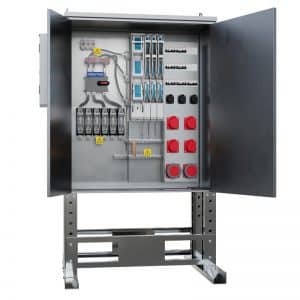
TSR-MHUB Main electric central 400A
Main electric central in a steel frame made in Finland…
-
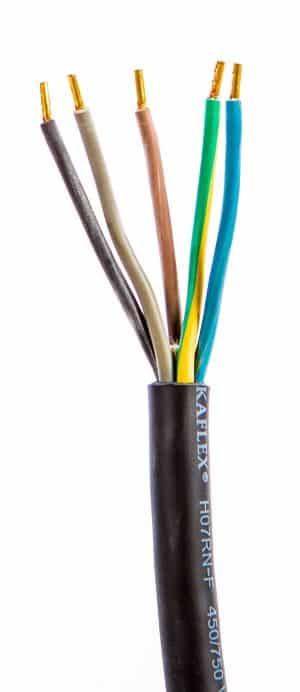
Rubber cable 2x1,0mm2 H07RN-F
Oil-resistant rubber cable suitable for use as a connection cable…
-
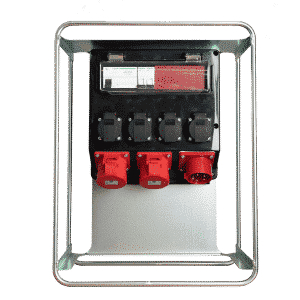
Distribution box 16A TAS16/1/K
A robust and powerful Finnish-made compact housing power distributor for…
-
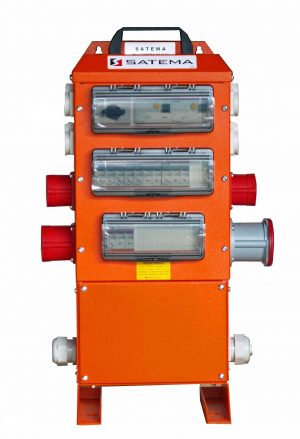
Power distributor TAK 63/125A KS
63 / 125A chainable power distributor with fixed cable supply.…