Generator load management and lighting control.
Spine switches a generator’s extra load on and off automatically, eliminating harmful underload operation. The same logic controls lighting and equipment remotely or on a schedule, without anyone needing to drive to the site to flip a switch. Spine control switches load safely and automatically.
A generator running underloaded fouls up unnoticed
When load drops to a fraction of rated output — overnight or over a weekend, for example — the generator runs underloaded and no one is there to notice.
The ratio between load and generator output stays a guess without continuous measurement.
At night and on weekends, no one is there to adjust extra load by hand.
Repeated underload operation causes fouling and shortens service intervals.
Site lights are left on or off manually, depending on who was last on site.
Spine control: how automatic load management works
Spine continuously measures the generator’s operating load. When the primary load drops below a set threshold, the device switches on an extra output via a contactor-controlled outlet.
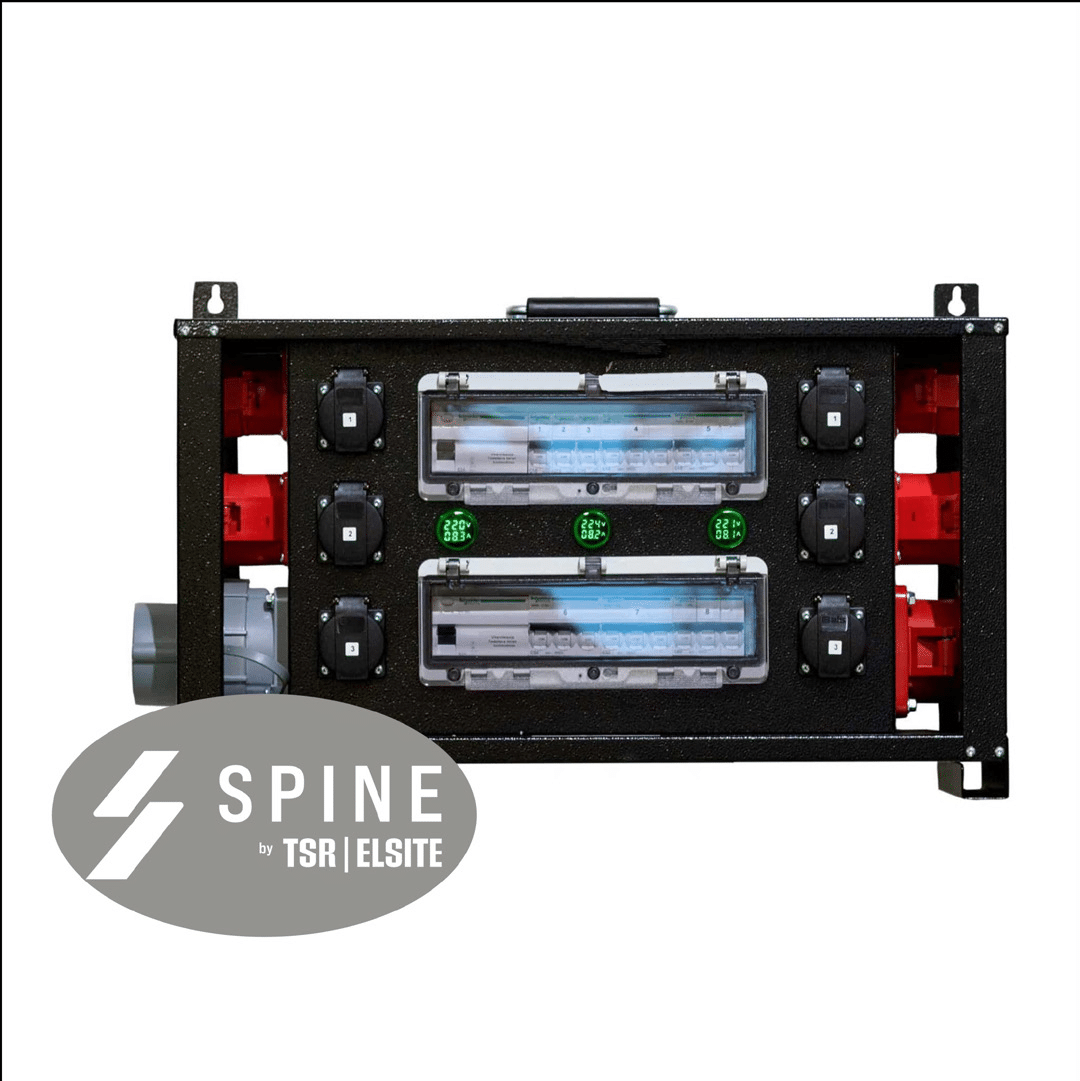
Plugs into a socket, no wiring
The Spine device is plugged into the generator’s own output socket, so all the power the generator produces passes through the device measured. No rewiring and no site-specific commissioning.
One output is for normal operating load, the other is reserved for extra load — an electric heater, for example — which Spine switches on only when the normal load drops too low. When the main load rises again, the extra load disconnects automatically.
- Load switches on when current is below 30% of rated current
- Load switches off when current is above 60% of rated current
- Both thresholds and the rated current are adjustable in the Spine app
- Alarms and status shown in the same view as the rest of the site
Why too low a load is harmful for a generator
Running a generator under too light a load causes both operational and mechanical problems. A stable minimum load significantly improves reliability, efficiency and service life.
Wet stacking
A diesel generator fails to reach adequate combustion temperature, so unburned fuel, soot and carbon build up in the exhaust system and engine components.
Poor combustion and smoke
Insufficient load leads to incomplete combustion, which causes black smoke and harmful emissions.
Reduced efficiency
The generator runs in a non-optimal temperature and pressure range, which lowers efficiency and increases fuel consumption over time.
Oil dilution
Low exhaust temperature allows unburned fuel to mix into the engine oil, which speeds up wear and shortens service intervals.
Unstable operation
Voltage and frequency regulation can degrade under very light loads, which can affect sensitive connected equipment.
The solution
Spine maintains a stable minimum load automatically, so the generator never runs in harmful conditions and no one has to monitor it by hand.
The same logic controls lights and equipment
Spine’s controlled outputs aren’t limited to a generator’s extra load. The same contactor control is used for remote control of lighting and equipment.
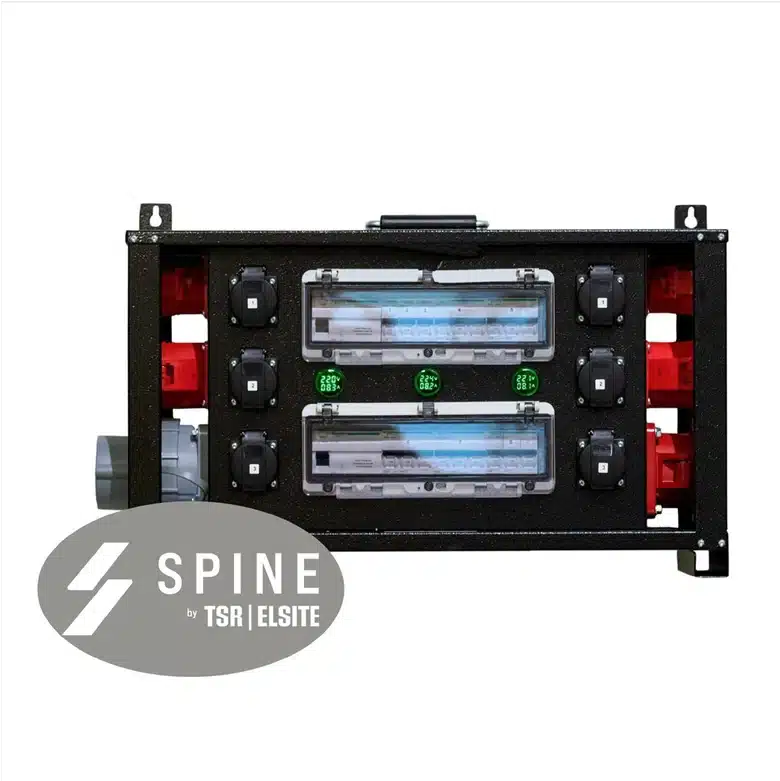
- On and off remotely Lighting and equipment are switched from the app from anywhere — no one needs to drive to the site to flip a switch.
- Scheduling Lights on automatically when a shift starts and off when it ends. Safety lighting can stay on its own separate output.
- Consumption visible in the same view You see what the controlled output is consuming, so the benefit of control is verifiable, not a guess.
- Heating control as its own area Regulating water-circulation heating by measured room temperature is handled by the Spine Valve unit. See heating and conditions → Also check out the Spine app.
Spine for control
TSR-HUB 63A Spine Load switches a generator’s extra load on and off automatically. Spine 16A LCU lighting control unit runs the site lighting on a weekly automation or live. Add the product to the quote cart, and we’ll get in touch with a quote for your site.
TSR-HUB 63A Spine Load
505010040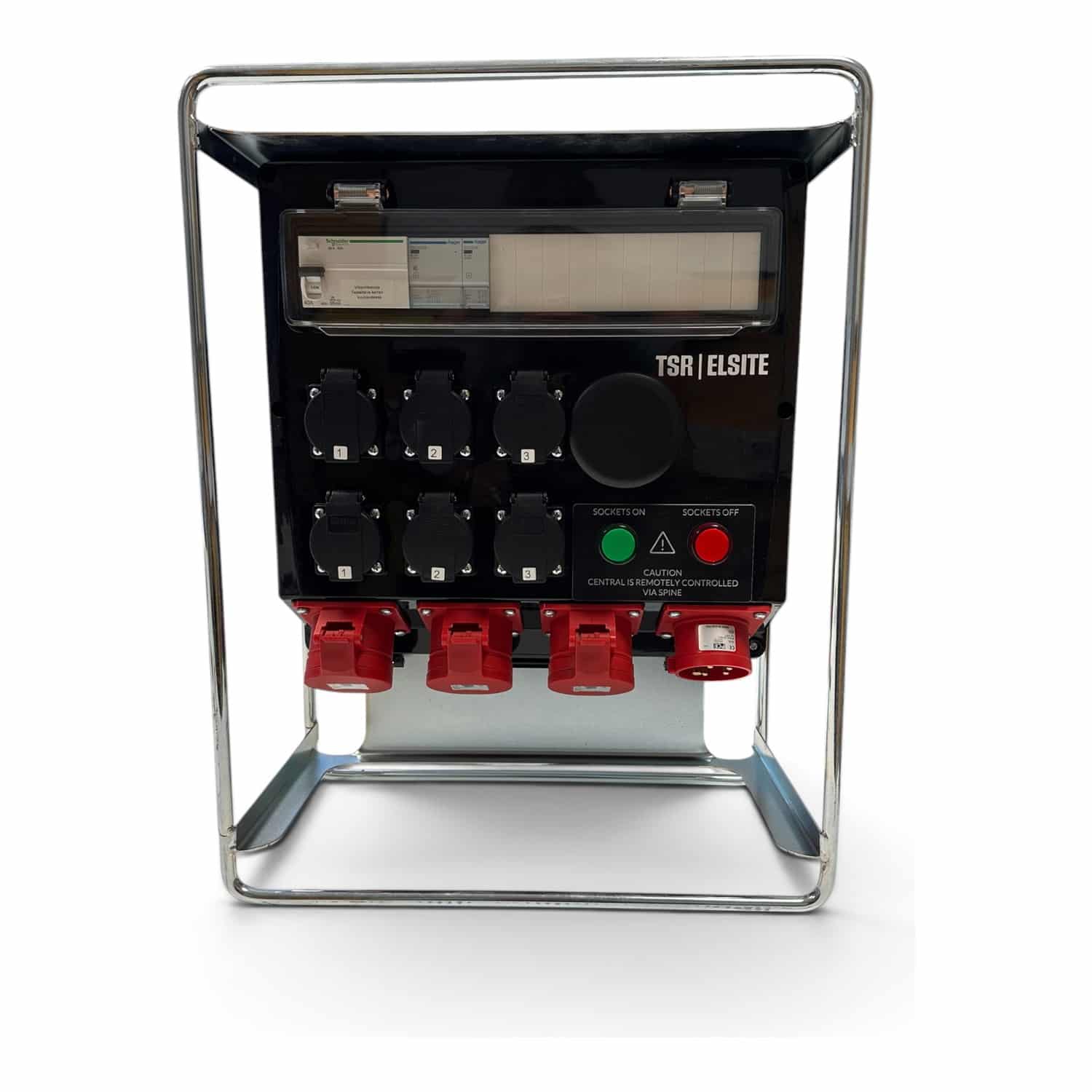
Spine 16A LCU lighting control unit
505010042Two ways to move forward
Request a quote
Know your generator size and extra load? Add the Spine control product to the quote cart and we’ll prepare a quote.
Go to products →Book a free 30-minute consultation
We’ll go through generator size, a typical load profile and a suitable extra load.
Book a time →Answers about load management and control
Does installation require electrical contracting or rewiring?
No. The Plug & Play device plugs into the generator’s socket, normal equipment into one output and the extra load into the other. No site-specific commissioning is needed.
What’s suitable as an extra load?
A resistive load, typically an electric heater. On the 32 A model the controlled output is 16 A, and on the 63 A model it’s 32 A.
Can the switching thresholds be changed?
Yes. The ON and OFF thresholds and the rated current are set in the Spine app. The defaults are 30% and 60% of rated current.
Do the controlled outputs also give consumption data?
Yes. All electricity passing through the board is measured, so the controlled output’s consumption appears in the same view as the rest of the site.
Does heating control belong here or on the heating page?
The Control page covers switching electrical outputs: a generator’s extra load plus lighting and equipment control. Regulating water-circulation heating by measured room temperature is on the Heating & conditions page.
Other Spine areas
All data flows into the same Spine app, so you can freely combine areas within the same site.
Electricity
Consumption, load, phase balance and voltage monitoring, plus reports.
Explore →Heating & conditions
Automatic heating control, drying, and temperature and humidity measurement.
Explore →Water
Remote water consumption reading and leak alarms; water shut-off with add-on devices.
Explore →